
Caviar 101

Caviar 101 – Caviar is the salt-cured eggs of a sturgeon fish. Most of us are lucky to get a few rare bites of it in our lives, perhaps as garnish on hors d’oeuvres or while ringing in the New Year at a fancy friend’s house.
But if you’re craving another taste or want to be that fancy friend, you’ll have to buy it yourself.
Caviar isn’t cheap and buying it online can be a high-rolling gamble if you don’t know what to look for.
Caviar 101 – What is Caviar?
It’s a common misconception that any kind of roe (i.e., fish eggs) can be called caviar.
In fact, caviar is specifically harvested from a few species of fish within the Acipenseridae family, collectively known as sturgeons.
Caviar styles are usually named according to the species they come from.
The most well-known varieties include osetra, beluga, and white sturgeon.
Some sturgeon species, like the beluga, may live for over a century and weigh more than 3,000 pounds.
Sturgeon roe is often referred to as black caviar, though the actual egg color may differ between true black, pearly gray, olive green, and dull gold.
Females can be harvested for their unfertilized eggs anytime after they reach maturity, which can take six to 20 years.
After the sturgeon roe is extracted, it’s painstakingly hand-combed to remove damaged eggs and any other debris, then mixed with about 4 to 6% salt by weight to season and preserve it.
Higher quality caviar is typically mixed with less salt to allow its inherent flavors to shine (making it malossol or “little salt” caviar), while lesser grades rely on more salinity to cover off-flavors and keep it fresh for longer.
Some caviars produced outside of the United States also contain small amounts of borax for preservation, though the ingredient is illegal to use in food here (be it imported or domestic).
After it’s seasoned, the caviar is packed into tins and shipped to distributors who repack the caviar into their own jars, or sell directly to customers, depending on the producer.
Caviar 101 – Types of Caviar
Osetra (aka ossetra): Perhaps the most popular caviar variety today, osetra comes from the Russian sturgeon (Acipenser gueldenstaedtii).
It is native to the Black and Caspian seas but is now farmed worldwide.
It has distinct, medium-sized eggs with black to golden coloration, which is well-balanced combination of butteriness and minerality.
Caviar 101 – Types of Caviar Beluga: No, not the whale. Beluga sturgeons (Huso huso) have historically been highly prized for their caviar, which looks like black beads and has a flavor that I found gently creamy, nutty, and slightly sweet.
Beluga products were banned in the US in 2005 to reduce the demand on their critically endangered wild populations around the Ponto-Caspian region (between Eastern Europe and Western Asia).
It’s only available from one exempted farm in Florida or beluga hybrids (often bred with Siberian sturgeons).
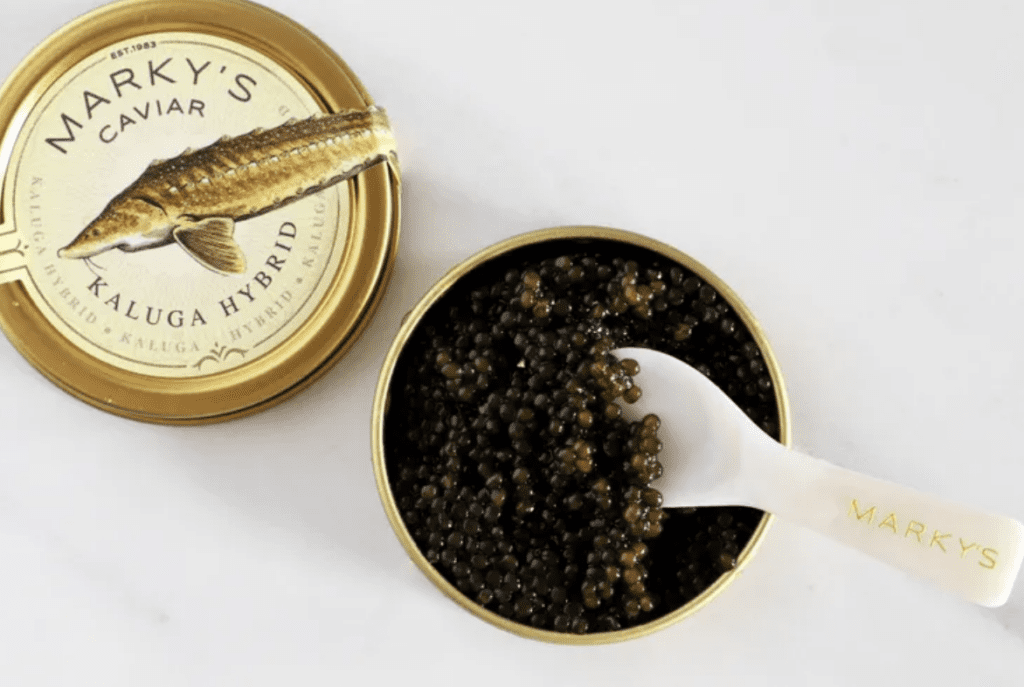
Kaluga: A critically endangered species, the kaluga sturgeon (Huso dauricus) is closely related to belugas. (It’s even nicknamed the river beluga.)
The few wild kalugas left live in fresh and salt waters near Japan.
Kaluga sturgeon are often crossed with Amur sturgeon (Acipenser schrenckii) for farming purposes.
Its caviar has large eggs with a bronze-green hue that is liked for its distinct savory salinity, and Grace described as “cheesy” and “decadent.”
Caviar 101 – Types of Caviar Sevruga: Sevruga sturgeon (aka stellate sturgeon or Acipenser stellatus) is another critically endangered species from the Ponto-Caspian region with medium-small eggs that have a firm texture and balanced minerality.
Sterlet: Native to the Baltic or Ponto-Caspian area, Acipenser ruthenus is a relatively small species of sturgeon that only grows up to 35 pounds.
Its small, dark eggs are similar to those of the sevruga but a bit brighter with a hint of nuttiness.
Caviar 101 – Types of Caviar Siberian Sturgeon: This endangered fish (Huso baerii, formerly Acipenser baerii) comes from the Arctic region.
Farmed Siberian sturgeons have black, melt-in-your-mouth eggs with a creamy flavor.
Hackleback: Hackleback caviar comes from the shovelnose sturgeon (Scaphirhynchus platorynchus), which lives in the Mississippi and Missouri rivers.
It’s often harvested from wild fish, though the species is considered vulnerable because of dam construction in their habitats.
Its olive-black eggs are small, and Grace found the sample she tried to be intensely briny.
Caviar 101 – Types of Caviar White Sturgeon: This species is native to the North American Pacific Coast and nearby rivers, but it’s farmed worldwide.
IUCN Red List of Threatened Species.
Its caviar is often compared to osetra because it, too, ranges from dark brown to olive-gold in color and has medium-large beads.
Paddlefish: Paddlefish roe is often incorrectly labeled as caviar, but the American paddlefish (Polyodon spathula) belongs to a related but separate family from sturgeons.
Their eggs have a pearly tone and strong, earthy salinity.
Caviar 101 – What to Eat Caviar With
When you get your caviar, store it in the coldest part of your refrigerator (usually the very back).
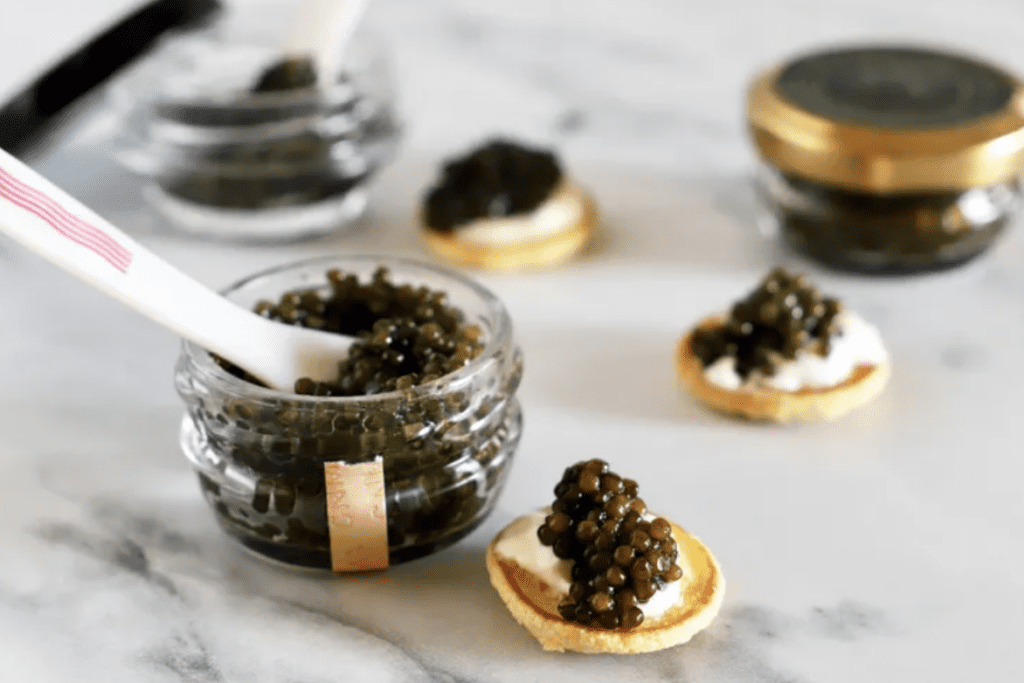
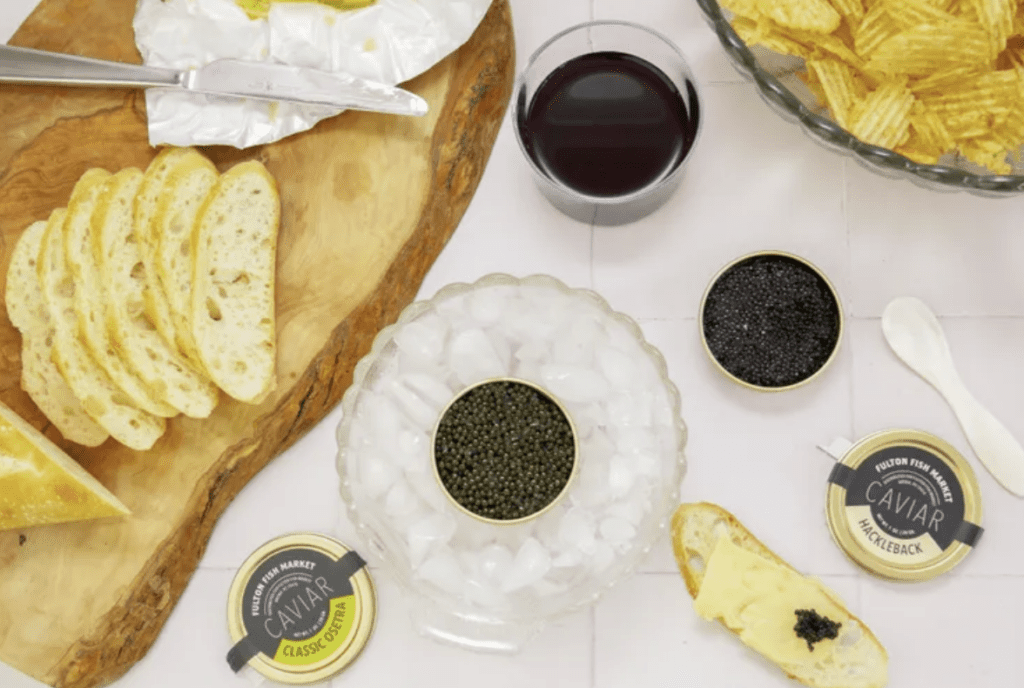
To serve, place the jar of caviar into a serving bowl filled with ice—making sure no water can get into the tin—and use a non-reactive spoon to serve it.
A mother-of-pearl spoon is traditional, but stainless steel, wood, or even plastic works.
Just avoid real silver (a tough task, I know), as it can react with the salt and impart a metallic flavor.
If you have leftover caviar, reseal it tightly, return it to the fridge, and eat within three days or so of when you first opened it.
Bergstein suggests trying the caviar as a “bump” (a little pile placed directly on the back of a clean hand) as your first taste to get the purest flavor.
Your hand will gently warm the caviar, allowing you to experience its full character without any other tastes to get in the way.
When you’re ready to pair the caviar, think salt, fat, and carbs.
Toast points and blinis (tiny yeasted pancakes) are both classics, often accompanied by a smear of butter or a dollop of crème fraîche and a sprinkle of chives.
Scrambled or hard-boiled eggs are another good foundation, along with a mild aromatic like finely minced shallots.
Potatoes and caviar make fantastic companions; potato chips add great salt, crunch, and richness, as do latkes (I’d highly recommend adding a spoonful of sour cream to either).
Avocado, sushi rice, and even white chocolate are more options worth exploring.
Just avoid any overly strong flavors that may distract from the caviar’s nuances.
To drink, serve caviar with a splash of ice-cold vodka, Champagne, or a crisp white wine.
Champagnes for the New Year >>
Lobster, Burrata & Tomatoes Appetizer >>